2026.08
CPPO was accepted to EMNLP 2026
Our work on coordinated pass@K policy optimization for code reasoning was accepted to EMNLP 2026.
Ph.D. in Computer Sciences
University of Wisconsin-Madison
I am a systems researcher building hardware, software, and models for small-scale AI on mobile and wearable devices. My work focuses on on-device AI, efficient LLM inference, RL post-training, and wireless systems. I am pursuing my Ph.D. at the University of Wisconsin-Madison, advised by Prof. Suman Banerjee.
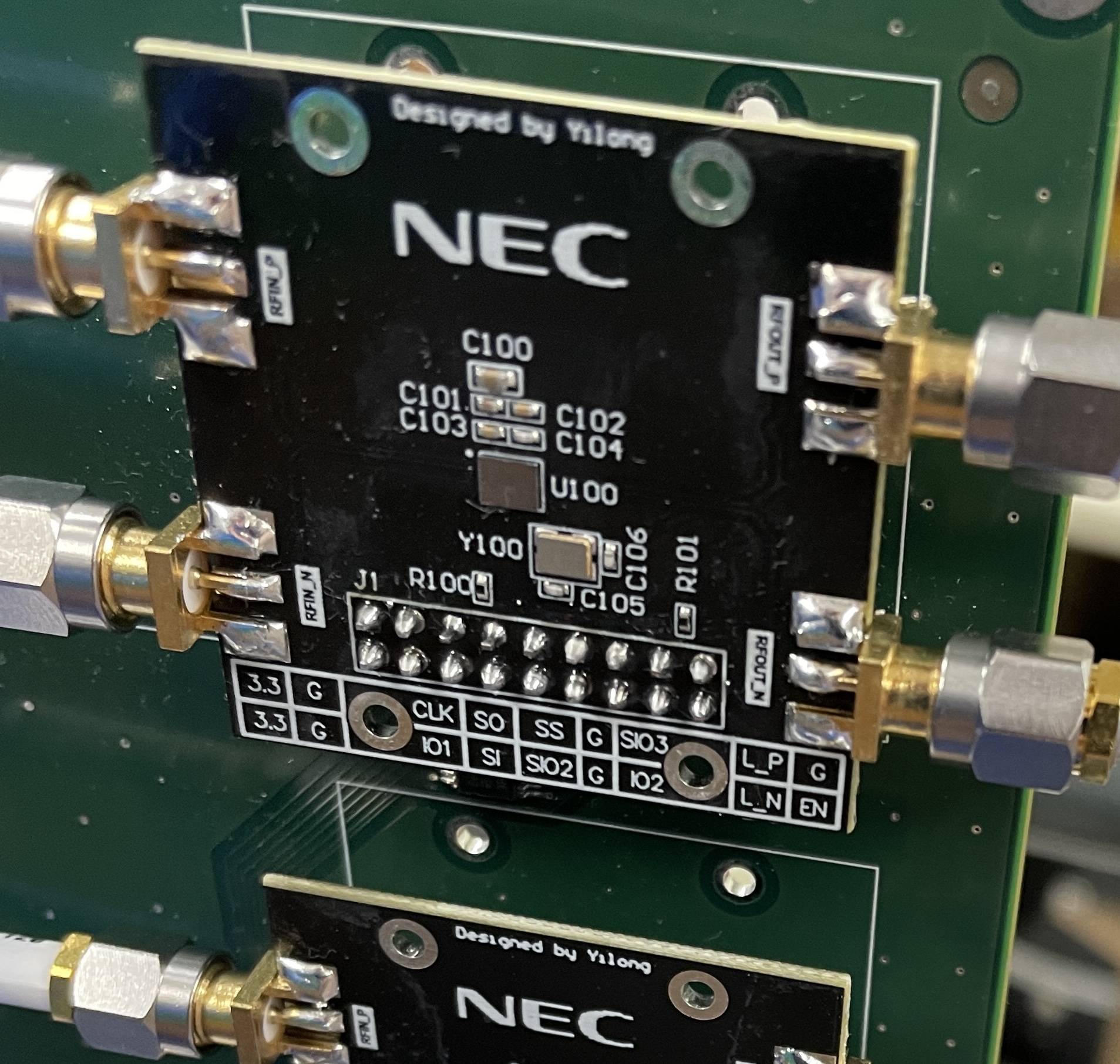
I have spent several years building MIMO radar systems and deploying them in real-world indoor and hospital settings. During my internship at NEC Laboratories America, I was fortunate to work under the supervision of Dr. Eugene Chai and Dr. Karthikeyan Sundaresan. Later, during a research visit to Meta Reality Labs, I gained first-hand experience with silicon and ML accelerator development for wearable devices while building a multimodal contextual AI pipeline. Together, these experiences have shaped my view of intelligent devices as complete systems, where sensing hardware, silicon, runtimes, models, and deployment constraints must be designed together.
I believe algorithms and models ultimately need to run efficiently in the real world, under real constraints. The shift from frontier AI models to smaller, deployable AI systems—and from large GPU clusters to personal devices—is not just a technical direction, but an inevitable trend.
My current Re-Mind project explores a privacy-preserving on-device cognitive assistant with real-world episodic memory for daily-life accessibility and individualized support. See the Re-Mind Slides.
AI must not be locked inside corporate black boxes. Free intelligence that people themselves can run, study, modify, reproduce, share, and trust.
Recent Momentum
2026.08
Our work on coordinated pass@K policy optimization for code reasoning was accepted to EMNLP 2026.
2026.05
MEDUSA repository is available on GitHub.
2026.03
CRANE is now open-sourced for direct Apple Neural Engine inference without Core ML.
2026.01
Our work on efficient multimodal inference for battery-powered small devices was accepted to ICLR 2026.
2025.06
Our work on scalable biometric sensing in the wild through distributed MIMO radars was accepted to MobiCom 2025.
2025.01
PalmBench, our benchmark of compressed large language models on mobile platforms, was accepted to ICLR 2025.
Selected Output
Recent work on efficient multimodal inference, mobile AI benchmarking, and wireless sensing systems.
Repeated sampling with a verifier is a standard way to allocate test-time compute for code generation, but drawing K independent samples from one answer distribution often wastes the pass@K budget on near-duplicate re...
EMBER studies Budgeted Pre-Query Retention for long-horizon agents: an agent ingests a stream before future queries are known, keeps only a fixed budget of source evidence, and later answers from that retained memory ...
Large Multimodal Models (LMMs) are inherently modular, consisting of vision and audio encoders, projectors, and large language models. Yet, they are almost always executed monolithically, which underutilizes the heter...
Radar-based techniques for detecting vital signs have shown promise for continuous contactless vital sign sensing and healthcare applications. However, real-world indoor environments face significant challenges for ex...
Deploying large language models (LLMs) locally on mobile devices is advantageous in scenarios where transmitting data to remote cloud servers is either undesirable due to privacy concerns or impractical due to network...
Integrating millimeter wave (mmWave)technology in both communication and sensing is promising as it enables the reuse of existing spectrum and infrastructure without draining resources. Most existing systems piggyback...
Many types of human activities involve interaction with passive objects. Thus, by wirelessly sensing human interaction with them, one can infer activities at a fine resolution, enabling a new wave of ubiquitous comp...
Research Systems
Three current research lines: reinforcement-learning fine-tuning for small models, wireless human sensing, and on-device AI systems.
RL Finetuning for Small Models
Improving small language models with RL fine-tuning, supervised fine-tuning, and memory policies for long-horizon agents under tight compute and context budgets.
View project contextWireless Human Sensing
Ongoing work on in-the-wild pupillometry with glasses-mounted 60 GHz mmWave radar, front-facing illumination context, and light-compensated cognitive sensing.
View project contextOn-Device AI
Multimodal assistants that run on small devices, combining custom hardware, embedded runtime software, local visual understanding, and persistent memory.
View project context